Published · BABA & KOKUM
On 3 November 2026 New Mexico voters elected Deb Haaland, a member of Laguna Pueblo and a former U.S. Secretary of the Interior, as governor. She is the first Native American woman elected governor of a U.S. state. By the next day Ukrainian news sites were sharing her photo and calling the bright floral scarf around her neck a kokum, in Telegraf’s words a traditional scarf that “appeared among the Indigenous peoples of Canada thanks to Ukrainian settlers” (our translation). BABA & KOKUM keeps a sourced file on this scarf. Here is what that file confirms, and where it stops. (Source NM, republished by the Daily Montanan, 4 November 2026; Telegraf, 4 November 2026.)
What happened on 3 November
Haaland defeated Republican Gregg Hull, the former mayor of Rio Rancho, watched the results at the Route 66 Casino Hotel and held her celebration along Route 66 on Laguna Pueblo land. She told the crowd: “just off this road, my grandmother was taken away to boarding school…yet we are still here.” As Interior Secretary she oversaw the Federal Indian Boarding School Initiative. (Source NM.)
The scarf story began in Ukraine. Telegraf reported a post by former Ukrainian MP Andriy Lozovyi, who shared her photo and called the scarf a kokum. The same article added that nothing confirms a Ukrainian origin for the beaded necklace in the photo, so only a visual likeness can be discussed. On 6 November Leopolis.news carried an announcement from the team of Circle of Choice (Коло вибору), a documentary in development by producer Oleksandra Bratyshchenko about Indigenous peoples of Canada and Ukrainian settlers; its research stage is supported by the Ukrainian Cultural Foundation, and the team names the kokum scarf as the film’s starting point. (Leopolis.news, 6 November 2026.)
What a photo can tell
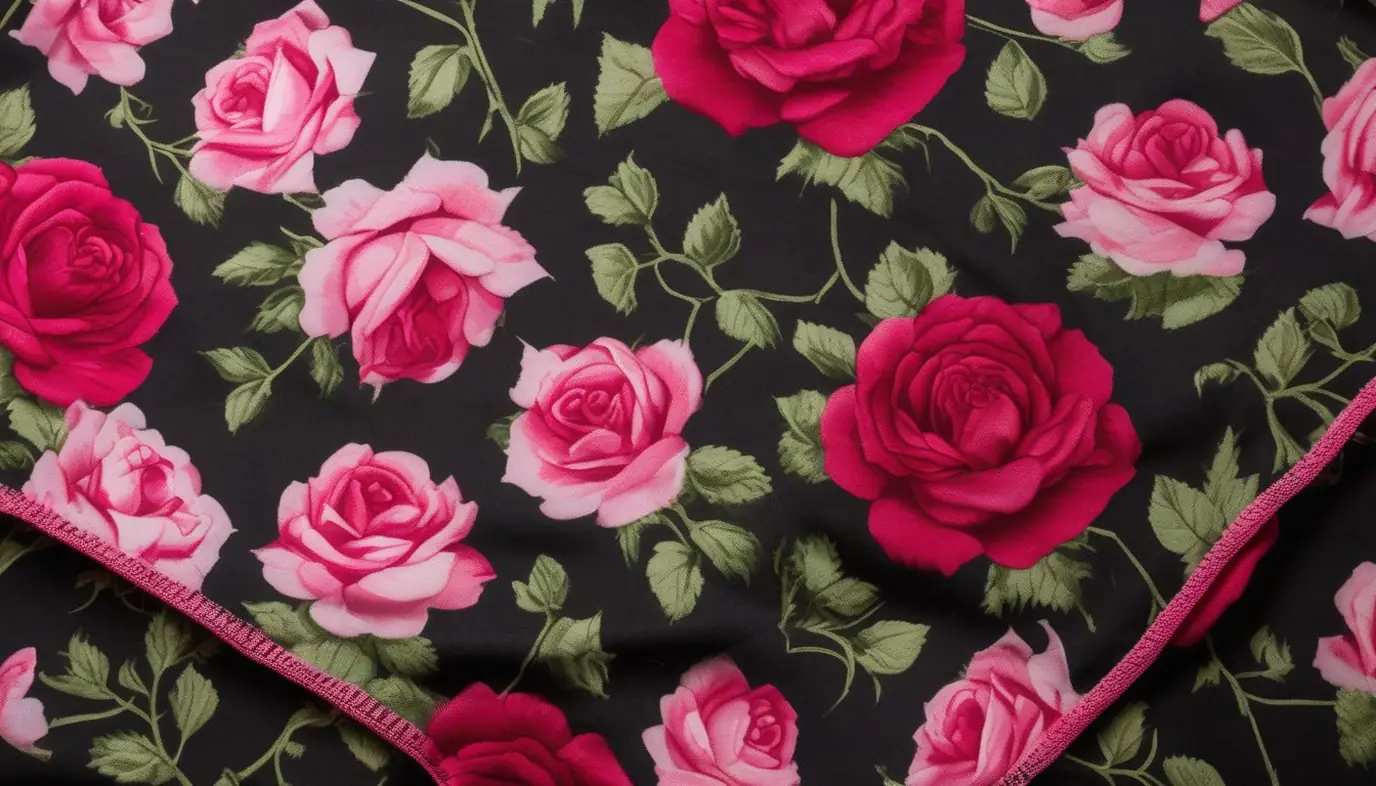
A photo shows a floral scarf. Who printed it, where it was bought and what it means to the woman wearing it stay outside the frame. As of 8 November 2026 we found no statement from Haaland or her campaign about the scarf. The one peer-reviewed article on the kokum scarf we know of puts the general rule plainly: “The meaning of each scarf varies depending on the wearer—whether Ukrainian, Indigenous, both, or neither.” (Shtykalo & Legault, Canadian Journal of Indigenous Studies 1(1), 2025, p. 104.)
The name itself is Plains Cree. In kôhkom the possessive is built in: it means “your grandmother”, and nôhkom means “my grandmother”. Laguna Pueblo is in New Mexico, and whether a Cree word fits a Pueblo woman’s scarf is a question for her and her community. (itwêwina, Plains Cree dictionary.)
The claim against the record
| What the posts said | What the sources show | Source |
|---|---|---|
| The scarves reached Indigenous peoples through Ukrainian settlers. | Stories told in Ukrainian-Canadian and some Prairie Indigenous communities describe Ukrainian women trading and gifting scarves to Indigenous women. The same researchers report “a distinct lack of formal research” and recognise “multiple histories”. | CJIS 2025, pp. 104, 105, 108 |
| The flowers on the scarf are a Ukrainian contribution. | Naturalistic floral designs appear on Métis work from Red River by the 1830s, and the Cree had adopted many Métis floral patterns by the late 1820s. Ivan Pylypiw and Vasyl Eleniak landed at Montreal on 7 September 1891. | Patrick Young, Gabriel Dumont Institute; Manitoba Historical Society |
| The first Prairie scarves have a known maker. | Every source we have examined is silent on the mill, importer, wholesaler, catalogue or store. That is the result of our search and the most interesting open question. | Our sourced file |
| Indigenous women wear it to support Ukraine. | Patty Krawec: “Long before we wore them in solidarity with Ukraine, we wore them in solidarity with our grandmothers and with each other.” | Rampant, March 2022 |
Kokum scarves in 2026: First Nations designs, made in Ukraine
The exchange happening now is far easier to document than the old one. On 5 October 2026 CBC reported a scarf by Swampy Cree artist Brooklyn Rudolph of Pimicikamak Cree Nation, who lives in Winnipeg, and Ukrainian creator Andrian Makhnachov. Rudolph hand-painted the design and included keewatin, the going-home star, and the star blanket; the artwork was scanned and sent to Ukraine to be made. Makhnachov said 35 per cent of the proceeds go to the Assembly of Manitoba Chiefs, and on 5 October the pair donated $3,000. It is his second kokum scarf with a First Nations artist; the first, with Brianna LaPlante, raised money for Ukraine. (CBC, 5 October 2026; CBC, April 2026.)
The 2018 #KokumScarfCampaign, created by Tala Tootoosis, came four years before the 2022 wave of solidarity scarves. (CBC Saskatoon.)
Before you share the photo
- Describe what you see: a floral scarf. The wearer decides what it is called.
- Give the Cree word with its meaning: kôhkom, “your grandmother”.
- Retell exchange stories with the teller’s name. Sandra Semchuk, a Ukrainian-Canadian settler from Meadow Lake, Saskatchewan, recalled Cree and Ukrainian women in her community trading scarves for moccasins (CJIS 2025, p. 108). The source does not say when.
- Name the designer when you post a scarf made today, and buy from Indigenous artists.
- Read the whole file on the kokum scarf: what is documented, what families remember, what nobody has published.
Does your family keep a scarf with a story?
Tell us who wore it, where it came from and who told you. We add a story to the file only with your permission and your name where you want it.
BABA & KOKUM is a community project started at UAFest. No Indigenous community or organization has partnered in this project yet. Quotes from Ukrainian sources are our translation.